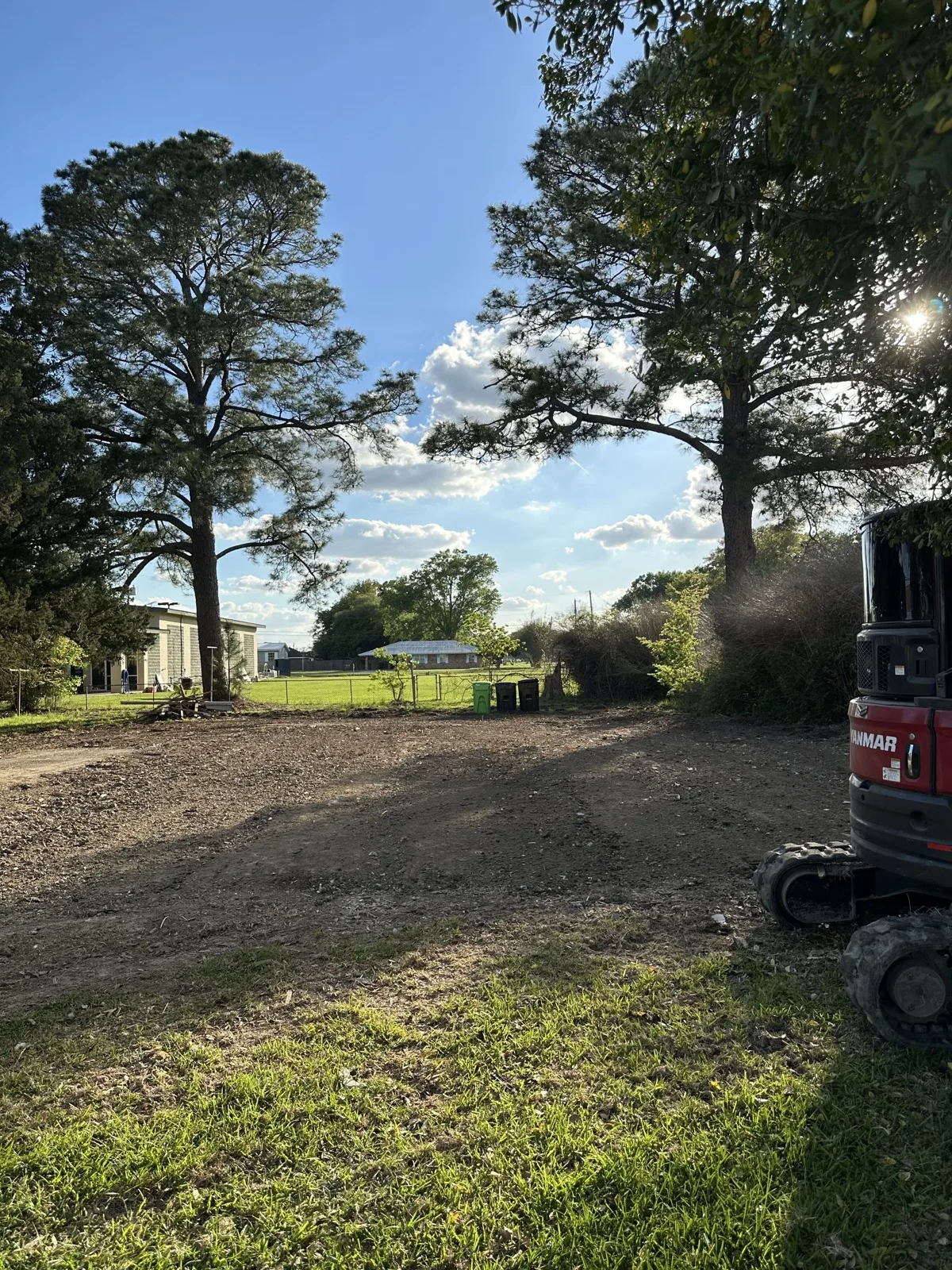
Excavation and demolition in Lafayette usually starts with an old house or a lot nobody can use. We are based in New Iberia, about 20 miles southeast, straight up US 90. That puts us on your street on a normal weekday. Most calls here land in the same few buckets. A 1960s house on a small lot has to come down. A back lot has grown over and cannot be mowed. A driveway culvert crushed flat, and now the ditch backs up in every hard rain. We look at the structure or the lot before quoting, and the estimate is free.
The ground here shapes every job. Lafayette sits on the Vermilion River, and a network of coulees carries the runoff into it. Coulee Mine, Isaac Verot Coulee and Coulee Ile des Cannes all empty into the same water. When the river runs high below the Pinhook Bridge, the flow reverses and pushes back upstream. Lafayette Consolidated Government puts yearly rainfall at 54 to 58 inches. That is why a flat back lot can stay soft for days after a storm. Dirt work, culverts and demolition all have to account for where the water goes.
Tell us about the job and we’ll get right back to you.
Lafayette's oldest housing sits in a ring around downtown. Freetown-Port Rico, McComb-Veazey, Sterling Grove, La Place and the Saint Streets all go back generations. Lafayette Consolidated Government calls McComb-Veazey one of the oldest neighborhoods in the city. The railroad split it from the urban core in 1880. The Evangeline Thruway and I-49 widened that gap in the 1960s. Lots on these blocks are narrow, and the house next door is close.
Tight lots change how a teardown runs. We work with compact excavators and a compact track loader, so the machine fits between fences. Debris leaves the site in roll-off containers. Slabs, driveway concrete and footings come out with the same equipment. Stumps come out of the ground with the excavator. Our demolition work on older houses covers houses, mobile homes, garages, barns and carports.
Permits for this work run through Lafayette Consolidated Government. The Codes Division sits at 220 West Willow Street, Building B. LCG's residential permit rules cover a single-family dwelling or a duplex. They also cover almost any structure tied to a home, including carports and sheds. Check the current demolition requirements with the Codes Division before a date gets set. Louisiana also has asbestos rules that apply before some buildings come down. We do not test for asbestos and we do not remove it. We plan the job around those rules and around what the parish asks for.
Two things cause it: the coulees and the river. Lafayette Consolidated Government lists the Vermilion River as the main stormwater outfall for the parish. Bayou Carencro, Beau Basin, Coulee Mine and Isaac Verot Coulee all drain into it. Flood stage on the Vermilion at Surrey Street is about ten feet. When the river below the Pinhook Bridge cannot carry the flow, water reverses upstream. Your back lot is the last thing in line.
August 2016 showed what that looks like. Rain in the Vermilion River Basin ran about 12 to 26 inches over four days. The river crested at 17.62 feet on August 15. Lafayette Consolidated Government lists flood years going back to 1907, and 37.86 inches fell in August 1940. Standing water is an old problem here, not a new one.
Most of the fix is dirt, slope and pipe. We regrade low spots, cut drainage swales, and build up house pads so water sheds off. Trenching and pipe carry it to the ditch or coulee that already serves your street. Our dirt work and site prep covers house pads, land leveling and lot grading. Fill and grading on a mapped flood zone lot can call for a floodplain development permit. LCG's Floodplain Management office is at 220 West Willow Street, Building B, at 337-291-8468. Call them before dirt moves on a flood-zone lot.
Open ditches drain most streets outside Lafayette's core. Your driveway crosses that ditch on a pipe, and that pipe is the culvert. A crushed, silted or undersized culvert backs water into the ditch and onto the yard. We dig the old pipe out, set the new one to grade, and rebuild the crossing. Our driveway culvert installation also covers trenching and drainage runs.
Lafayette has written standards for this. LCG's Public Infrastructure Design Standards say all driveways must be permitted. That runs through a driveway permit application or a building permit application. Along open ditch roads, a driveway crossing is limited to 32 feet of culvert. Circle and horseshoe driveways can run up to 56 feet. Anything longer needs a hydraulic analysis by a Louisiana Registered Professional Engineer. The minimum pipe size for any culvert is 15 inches.
Nothing goes into the drainage system without written approval from Public Works. That approval comes before any pipe goes in the ground. Once the crossing is right, the drive itself is straightforward. We install new gravel driveways, regrade rutted ones, and top off drives that have thinned out. The base gets shaped so water sheds off the surface.
South Lafayette keeps filling in. The Kaliste Saloom corridor is one of the fastest-growing parts of the parish, and River Ranch anchors it. Commercial building has spread along Camellia Boulevard between Kaliste Saloom Road and Verot School Road. LCG extended Lake Farm Road to Settlers Trace Boulevard to open more of that ground. Ambassador Caffery Parkway has pulled development toward it for years.
Infill lots come with old fence lines, brush and volunteer trees. We underbrush, pull the growth out, and clear the lot down to workable dirt. Then the site prep starts, so a builder has a pad and a grade to work from. The same clearing and grading goes on north of town, and we handle excavation in Carencro on the same run.
Debris removal is usually part of the same job. Construction, demolition and storm debris leave in roll-off containers or dump trailers. Storm cleanup around Lafayette is a recurring need. Out on the rural edges of the parish we also dig farm and recreational ponds, including crawfish pond work. Every one of those gets a free estimate. Call (337) 201-0594 and tell us what is on the property.
Communities & areas we serve around Lafayette: Freetown-Port Rico, McComb-Veazey, Saint Streets, Sterling Grove, La Place, Oil Center, Broadmoor, River Ranch.
Lafayette ZIP codes served: 70501, 70503, 70506, 70507, 70508.
Free, no-obligation estimates throughout Lafayette Parish.
(337) 201-0594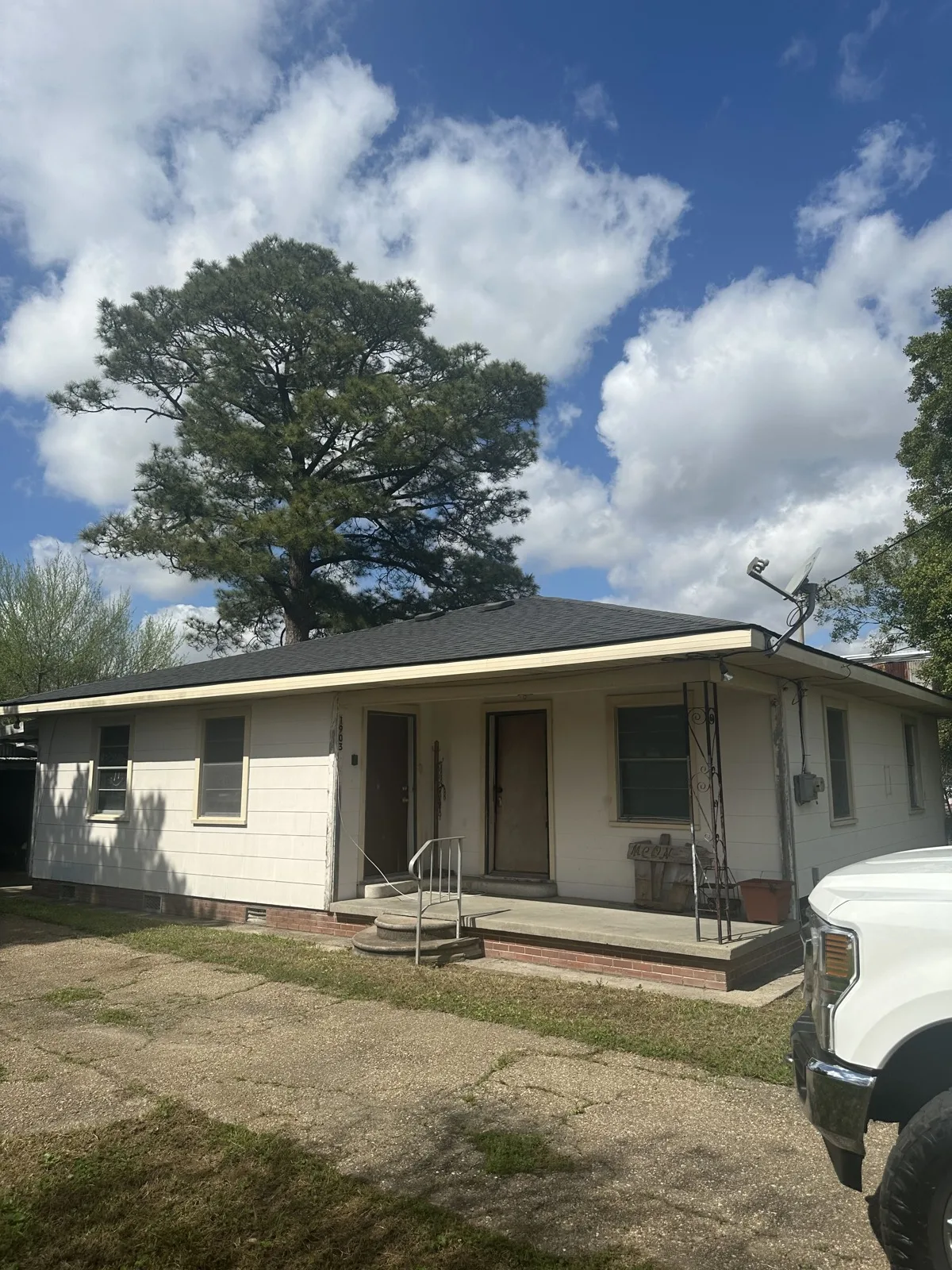
We handle demolition on houses, mobile homes, garages, barns and carports, plus small commercial buildings. We also break out and haul off old concrete slabs and driveways. Free estimates across Acadiana.
View Details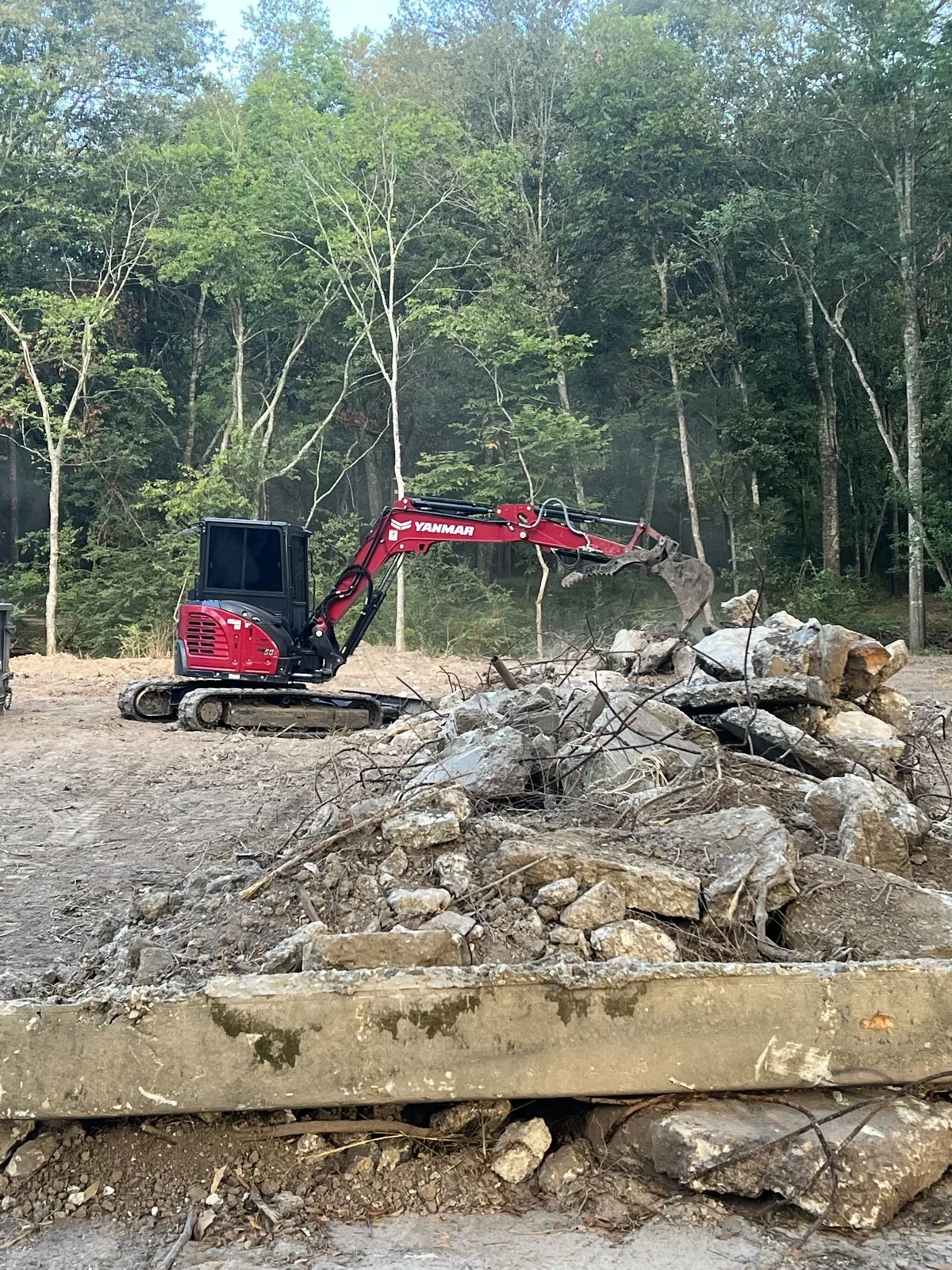
We clear overgrown lots and acreage around New Iberia. That means underbrushing, brush removal, briars, vines and small trees. The vegetation leaves the property in dump trailers or roll-off containers.
View Details We do dirt work across Acadiana: house pads, site prep, lot grading and yard leveling. Our excavators and track loader move, spread and pack fill to the grade you need. Call for a free estimate.
View Details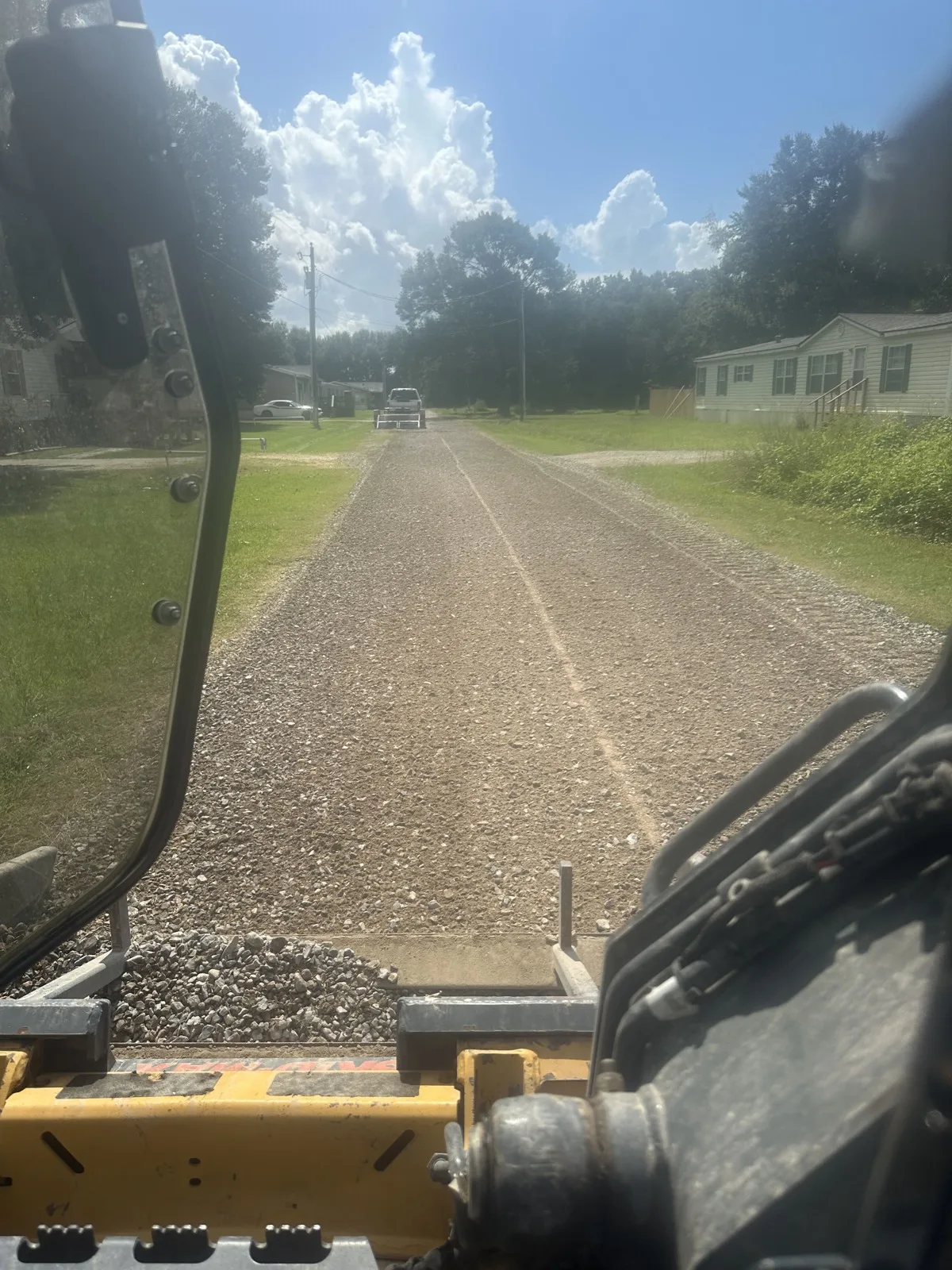
We build new gravel driveways and rebuild the ones that have washed out or gone to potholes. Crushed limestone gets shaped with a crown so rain runs to the sides. Free estimates around New Iberia and Acadiana.
View Details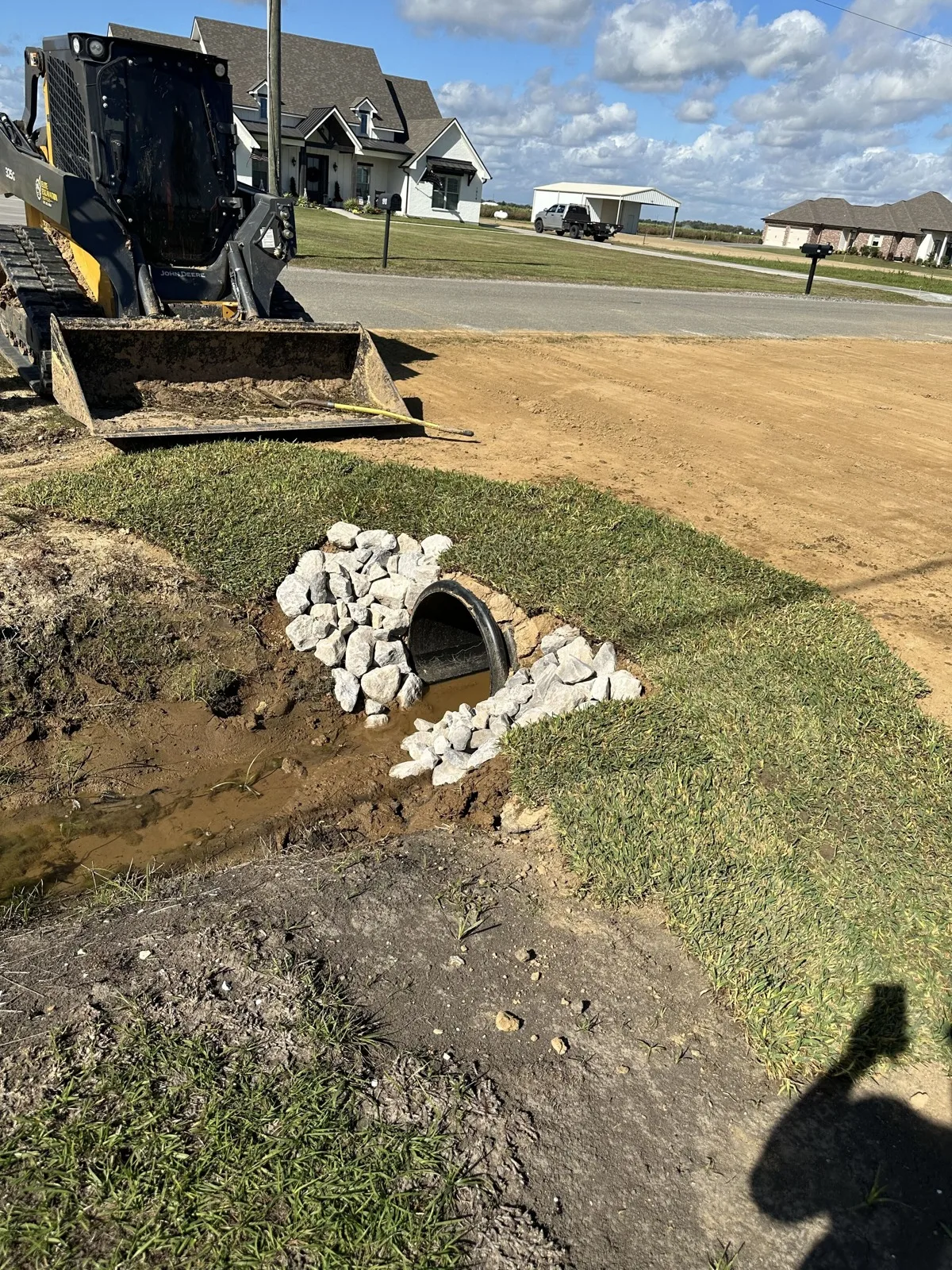
We install driveway culverts and replace crushed or rusted pipe across Acadiana. Every pipe gets set to the ditch grade so water drains instead of backing up. Free estimates on culvert installation in New Iberia and the surrounding parishes.
View Details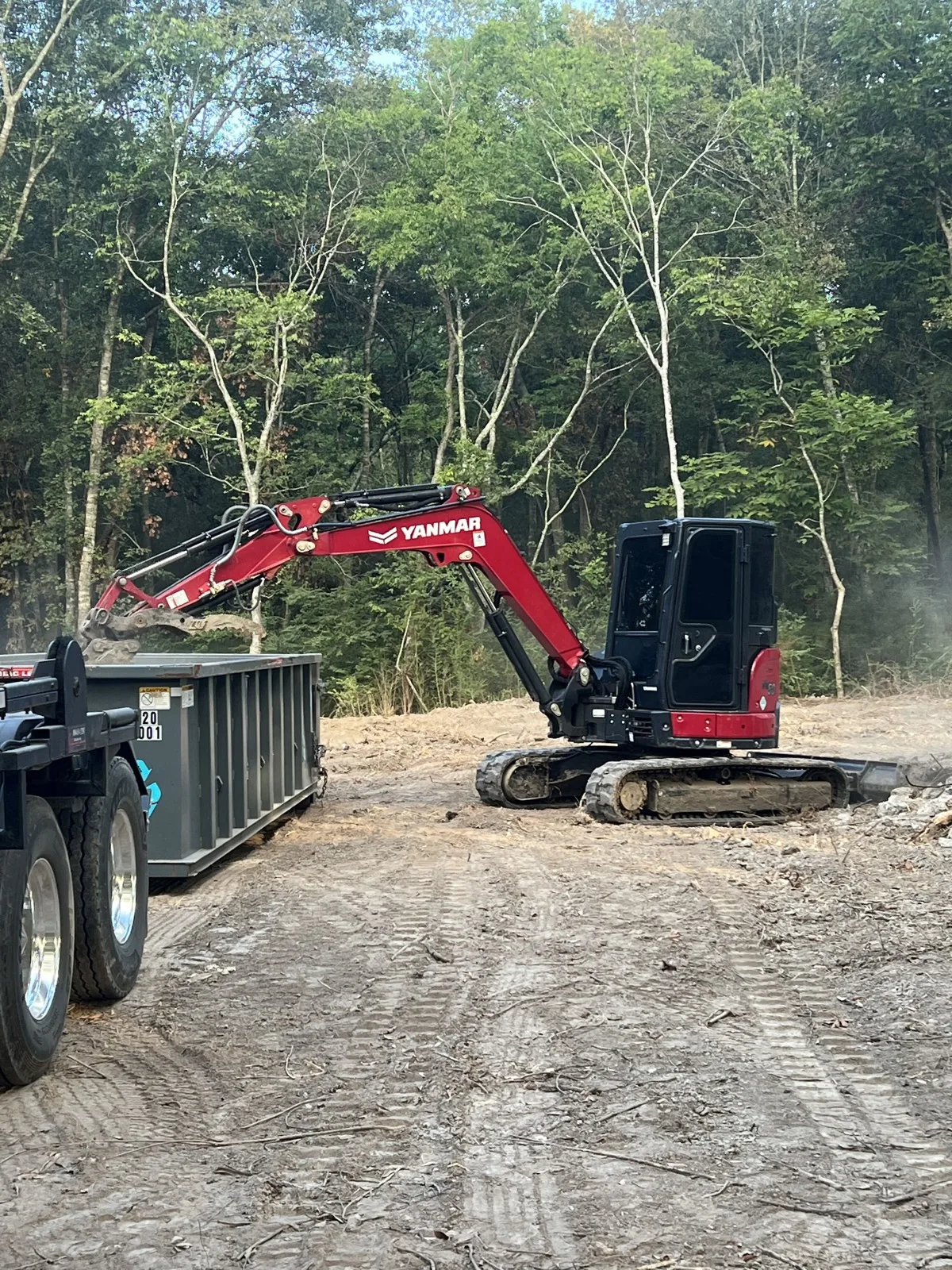
Debris removal for piles too heavy to move by hand. We load construction, demolition and storm debris with an excavator or track loader. The load leaves in a roll-off container or dump trailer.
View DetailsA few of the questions we hear most around Lafayette. If yours is not here, call and ask. The person who answers runs the jobs.
A structure that needs to come down, a lot to clear, a pad to build, or a driveway that floods? Call or send the form. We come look at the property, price the job in person, and give you a number that holds. Estimates are free.
Tell us about the job and we’ll get right back to you.